We all know how the pandemic has affected the way we ‘look’ at dance, especially on the screen. But this is not the first time dance has been seen on screen. Each country has had its history, its evolution, and the moment when this transition took place.
It is interesting that just a year after their invention in France in 1839, daguerreotype cameras were advertised in Calcutta. It is also important to recognise that photographic societies in Bombay, Calcutta and Madras were beginning to appear on the scene, organising events and building community, from the 1850s onward. Since the arrival of the camera in India in the mid-1850s, the foundation of the “new medium” of photographs, films and television has only grown stronger and more powerful.
So far, the discussions and discourse around dance and film in India have been ‘seen’ from a perspective that uses the camera merely as a passive, ethnographic, and historical experience. It is important to underline that the interaction of the camera with dance began as a purposeful galvanising of national pride, especially in the post-independence Nehruvian era, when dance was to play the role of ‘binding’ a very ‘diverse’ country.
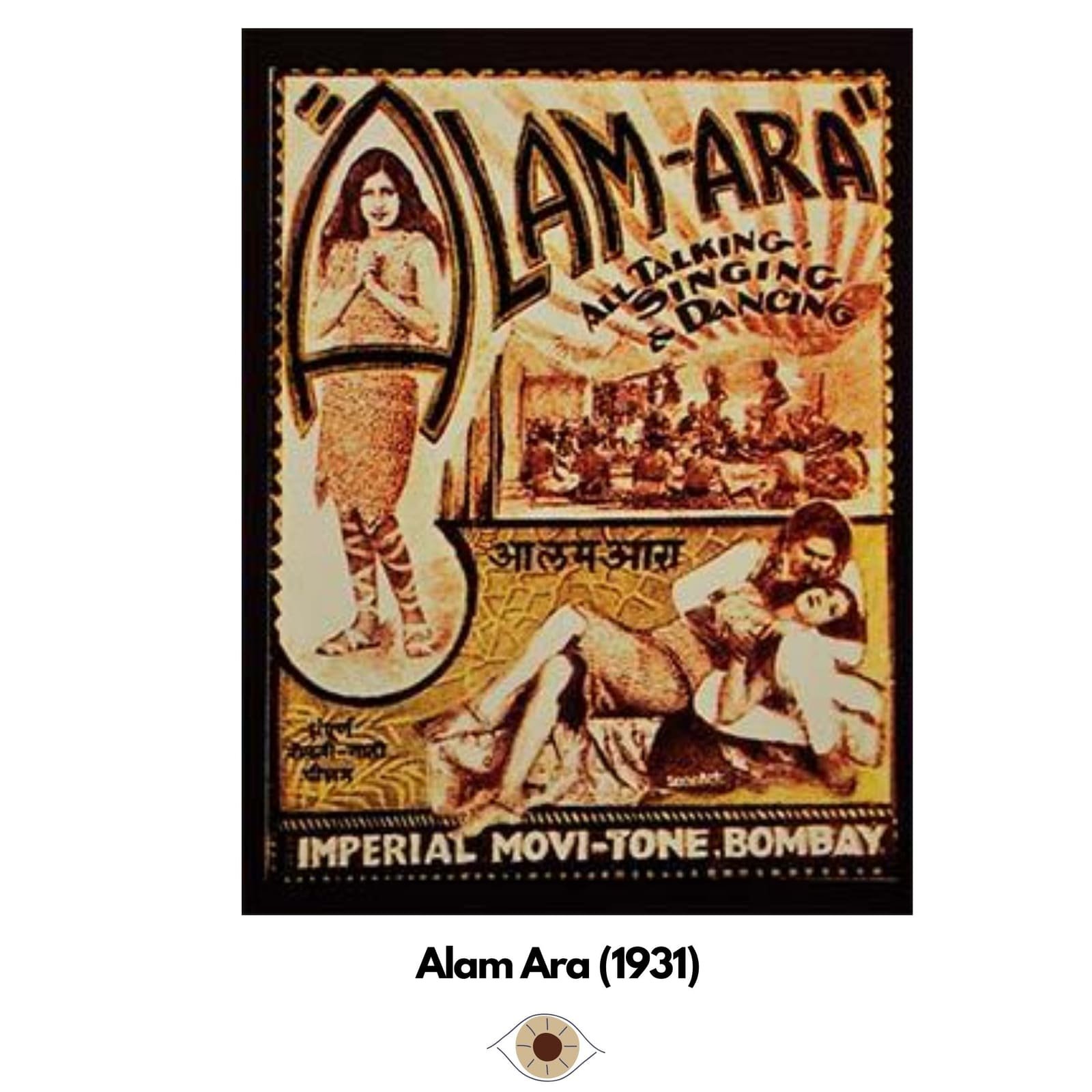
India has had a film culture since at least 1931, when Alam Ara, the first sound film, used music, song, and dance.
The pioneering filmmaker Hiralal Sen’s first film was the dance sequence from The Flower of Persia, filmed in 1902. He filmed many dance and performance-based films, since he was closely connected to the Classic Theatre in Kolkata. His Marjina Abdulla (1907), complete with all its dances, unfortunately perished in a fire along with other Hiralal creations.

Also noteworthy are the cinematic experiments of the 1940s in Uday Shankar’s Kalpana and Chandralekha, by Sadanand Menon, which worked with dance designed ‘specifically for the camera’. In Bollywood, the dancing body is seen as an object of ‘desire’ (Chakraborty, 2016), voyeuristically used for the camera. The camera and its operator have most often been passive observers, documenting the autobiographical narrative of a dancer, recording full-body dancing in any form, or projecting a gendered dancing body in the item numbers of Bollywood.
Where were the women? Were they ‘behind’ the camera or in ‘front’ of it?
Here was a filmmaker of her time, defying boundaries as a director, screenwriter and actor in a male-dominated film industry. Anusuya Kumar, a writer and researcher, writes: ‘Fatma Begum’s choice of a Persian tale for her film instead of the Hindu mythological material used by her male precursors was remarkable for the way it first opened up rich imaginal fields from India’s multicultural Parsi and Armenian communities and drew them into popular focus on screen.’
She became a pioneer of fantasy cinema, using trick photography for early special effects. No known copies of her 1926 film Bulbul-E-Paristan exist, but she also set up a production house, Fatma Films.

My current research with the camera comes from an understanding of how, at this moment, with the advancement of dance research vocabulary, we can think of the camera as valuing the ‘ambiguities’ and ‘hybridities’, both physical and cultural, of a moving body. Especially during the coronavirus pandemic, which continues to alter our lives more than ever before, I believe that dance spectatorship, practice and pedagogy need a fresh mode of thinking, creating, presenting and learning, as well as new imaginations of engagement with audiences and communities.
What are the questions that a dancer asks the camera? Is it more than these questions? Where does the power lie?
I seek a space where dance can emerge as an entity of its own, not bound by the rigid boundaries of religions and cultures, but traversing a relationship between the moving body and the camera that still remains unexplored: a space where the camera becomes a tool that is ‘subjective, between and amidst’ (Nikolai, 2016), where a ‘camera-consciousness’ (Deleuze, 1985) emerges that becomes ‘an opening to a proliferation of other spaces’ (Brown, 2010).
Where do we first see dance on stage ‘becoming’ dance on screen in your own home country?
- Brown, C. (2010). Making Space, Speaking Spaces. In A. Carter & J. O’Shea (Eds.), The Routledge Dance Studies Reader (pp. 58–72). London and New York: Routledge.
- Chakraborty, P. (2016). Sensory screens, digitized desires: Dancing Rasa from Bombay Cinema to Reality TV. In D. Rosenberg (Ed.), The Oxford Handbook of Screendance Studies (pp. 125–142). New York.
- Deleuze, G. (1985). Cinema 2: The Time-Image.
- Nikolai, J. (2016). The Camera-Dancer: A Dyadic Approach to Improvisation. The International Journal of Screendance.
First published on Sumedha’s earlier website on 3 August 2020.