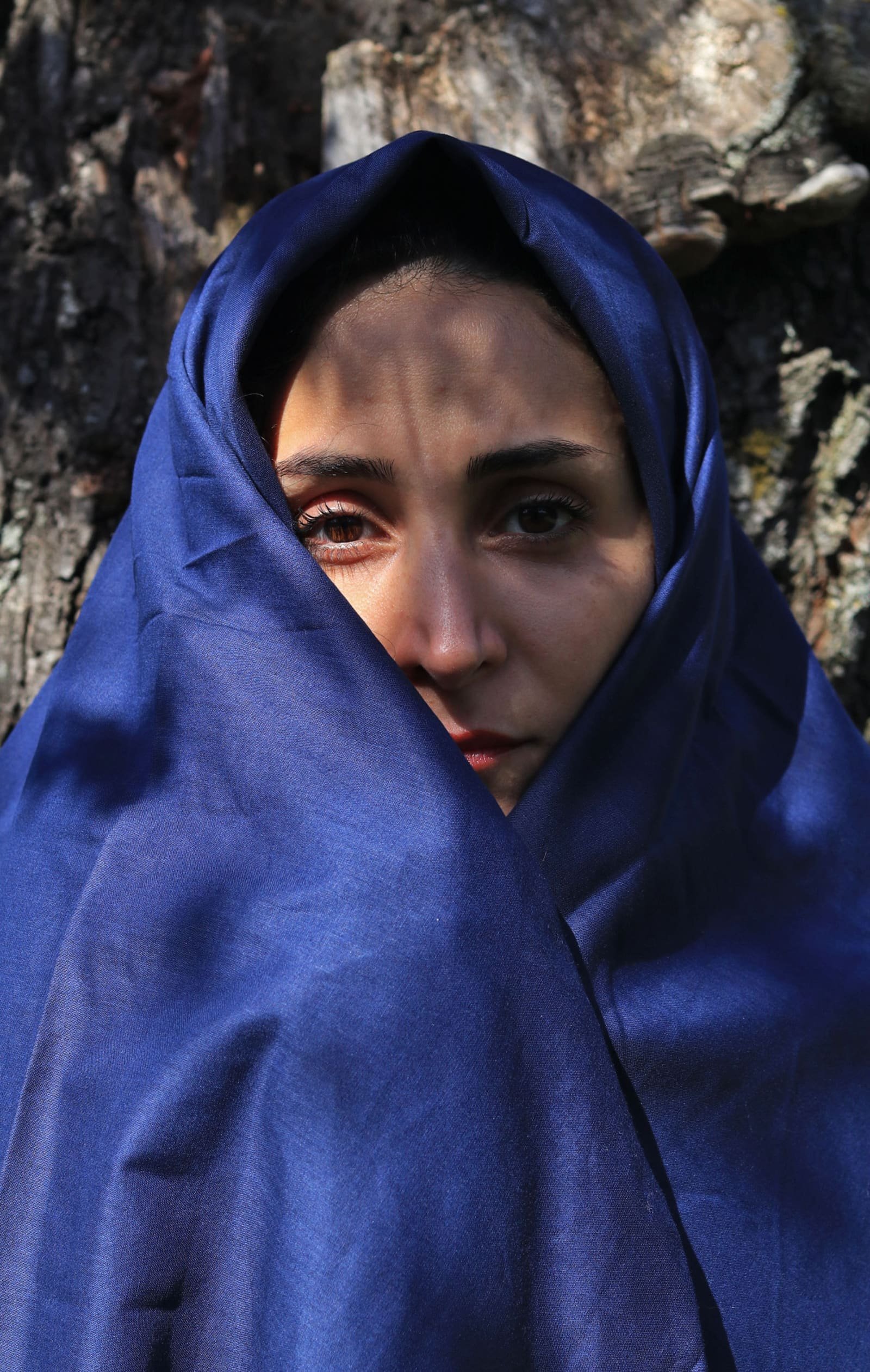
Between the desire
And the spasm
Between the potency
And the existence
Between the essence
And the descent
Falls the ShadowT. S. Eliot, “The Hollow Men”
The idea of in-betweenness, of moments in and out of time, of shadows, of transition, is a common theme in Eliot’s poetry. It is a phenomenon witnessed worldwide, where everyone and everything is constantly under the ‘shadow’ of socio-political and cultural transition. Transition is inevitable. Imkaan, which means possibility in Persian and Urdu, is an Indo-Iranian, collaborative and interdisciplinary photo-dance performance and visual storytelling project.
I met Hediyeh, from Iran, in the Erasmus Mundus master’s programme Choreomundus, and in a conversation with her I heard that it is ‘illegal’ to dance in Iran. That was unfathomable for me, questioning dance and dancing from a country like India, which celebrates dancing in some form or other.
Curious to listen to her journey, but also to take a back seat as a dancer, I wanted to be a witness.
The camera for me then became a tool to translate this desire to document and understand how the body is limited and veiled.
What is it to dance where dance is illegal?
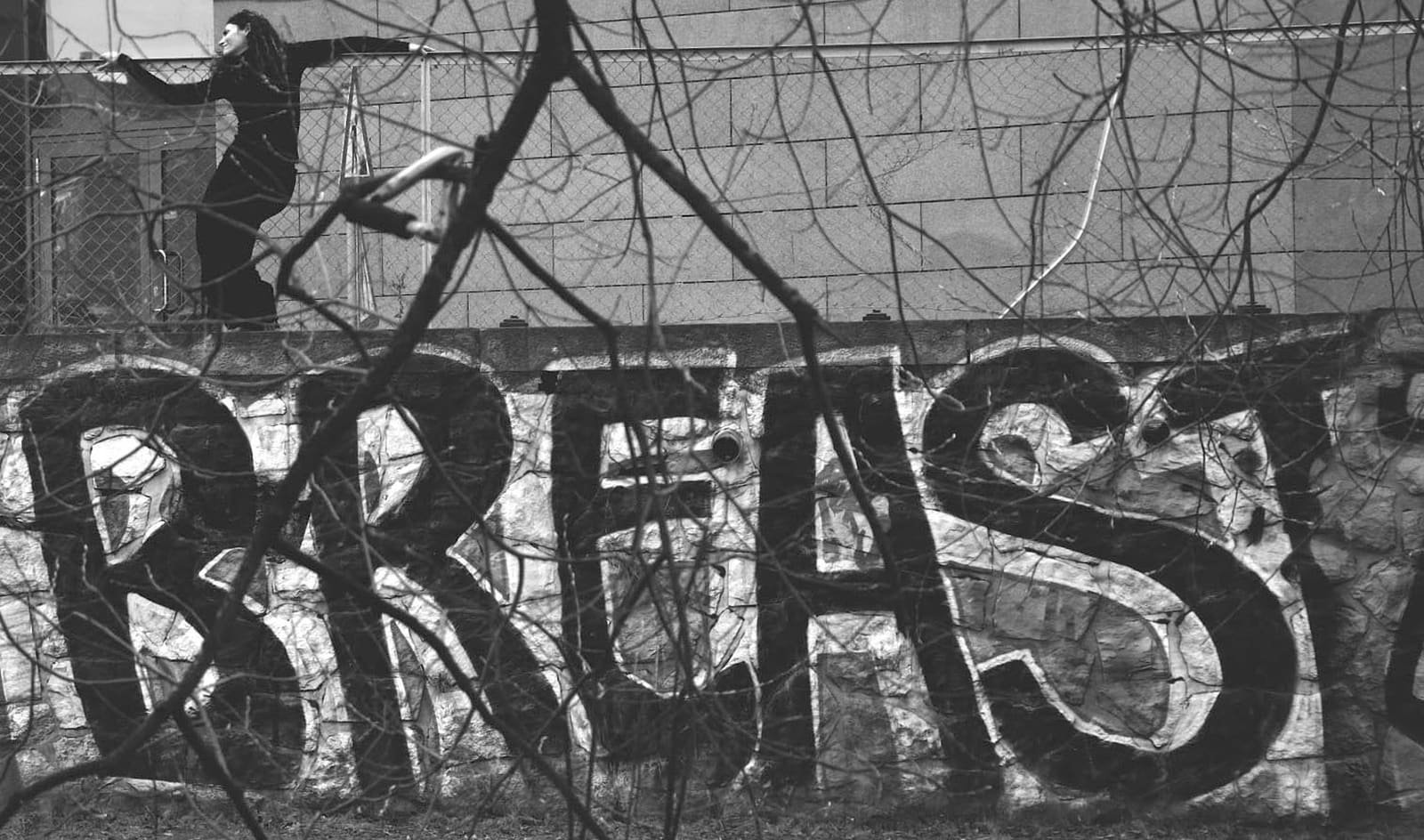
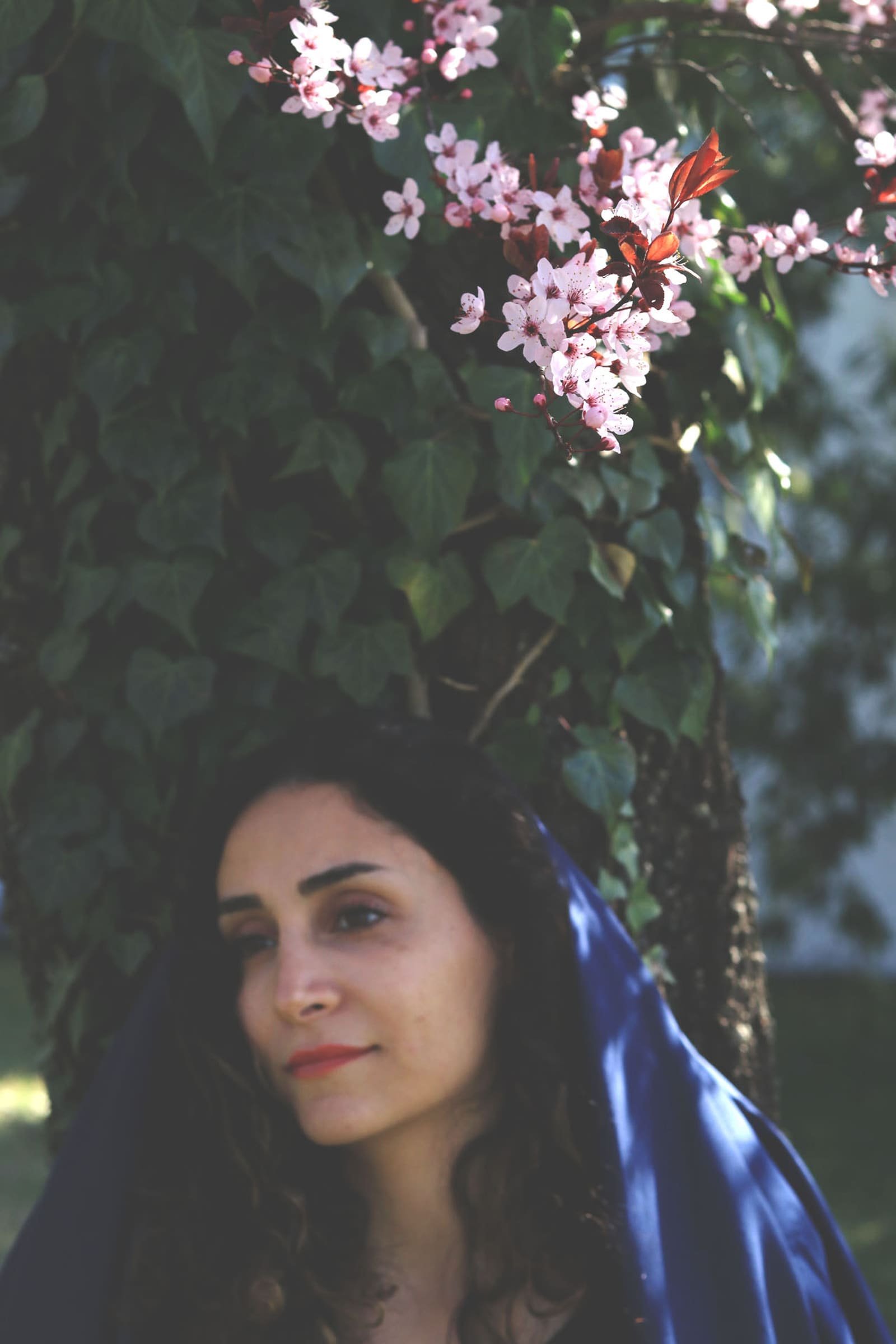
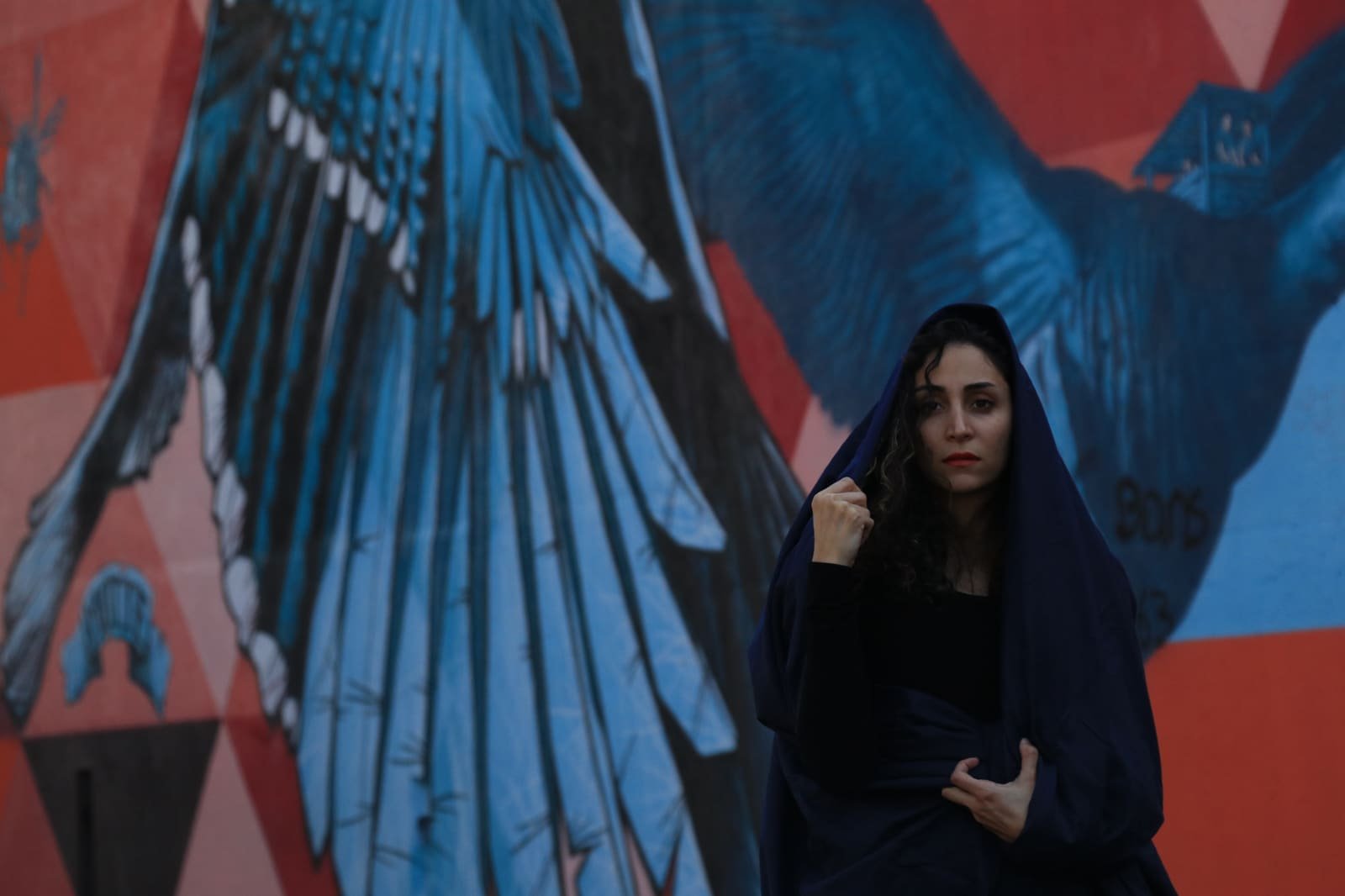
Imkaan aims to understand the body in transition through transformative self-performance and identity creation, using the camera as a photographic tool. Through our own cross-cultural connections, Hediyeh Azma, an Iranian underground dancer, and I, as the photographer, draw on our training as dancers to capture through the camera the ambiguity of the moving body that occurs at a threshold yet to be crossed. Hediyeh’s choreographed body was juxtaposed over street graffiti, caged inside wired enclosures or enmeshed in tangled foliage, with particular attention to the affective qualities of these spaces, acknowledging what the social theorist Henri Lefebvre calls the ‘generative relation’ between them. Body and space co-produce one another through practices, gestures, and events.
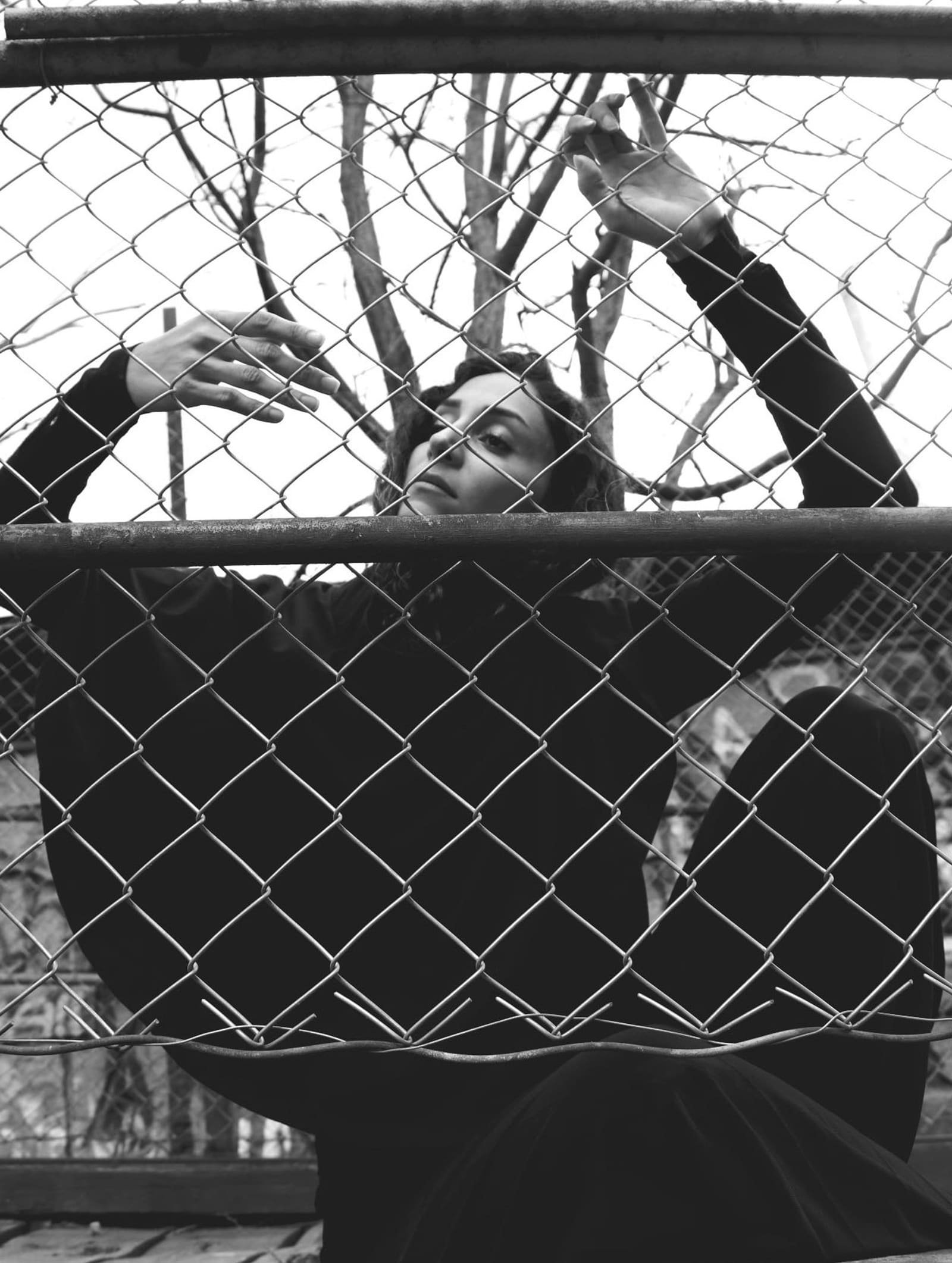
The moment when one clicks the shutter of a camera to capture a fleeting experience, instantly turning it into a tangible representation, is a flash of performed self-encounter.
It is that liminal twinkling when reality is turned into an unreal image and, in that process, facilitates self-reflection. As the art critic Geoffrey Batchen (1994) succinctly states, ‘Photographers intervene in every photograph they make, whether by orchestrating or directly interfering in the scene being imaged; by selecting, cropping, excluding, and in other ways, making pictorial choices as they take the photograph.’ A photographed moment thus has the unique ability to draw one’s attention from the obvious to otherwise obscure instances of experiential states of selfhood, through the ‘mediated’ eyes of the photographer. Excerpts from my collaborator Sourabh Harihar’s emotive poems further this imagery of a body under siege, with lines such as “I pin my laments on the boughs laden with silence”.
How does the body undergo a feeling of detachment, when it is neither here nor there? What is it to desire and believe in a mental image of freedom?
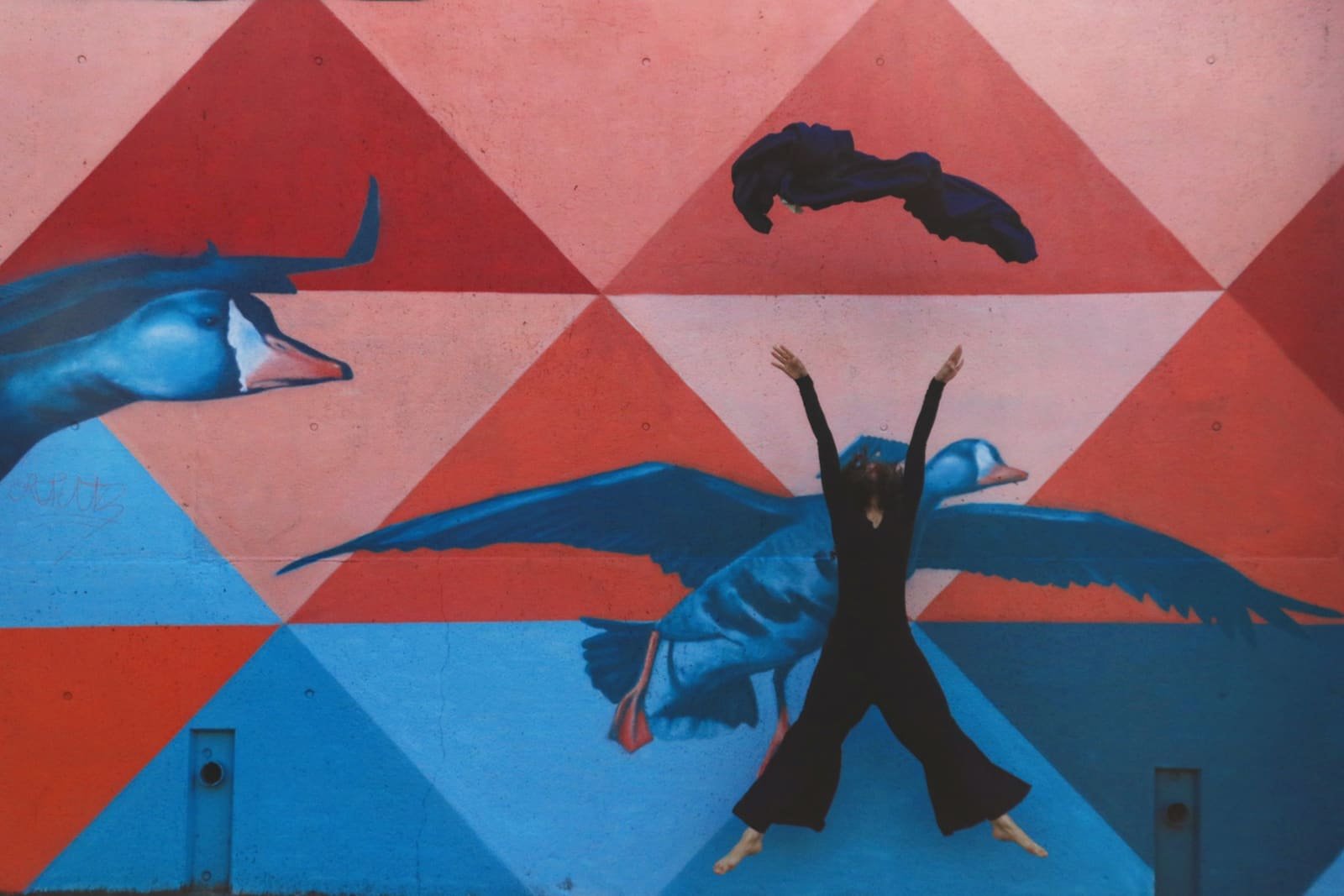
Imkaan can also be seen as a re-conceptualisation of liminality as described by the cultural anthropologist Victor Turner. Imkaan was a photographic journey that started between two dancers sharing their stories of displacement from their homelands. This was our first international photo project, where I was a dancer, but behind the camera, trying to understand how a rectangular frame can capture the ephemeral form of dance as a frozen moment of ephemerality. The still imagery, where dance is shot in a particular stance, was consciously chosen by Hediyeh and me.
The ‘eye’ of the camera emerged as a photographic tool, through which I was a witness to the story of an Iranian underground dancer, Hediyeh Azma.
By representing the ‘self’ as an ideological process, this pictorial volume furthers the important thesis that personal and social histories, spanning multiple cultural boundaries, are instrumental in the creation of the notion of selfhood.
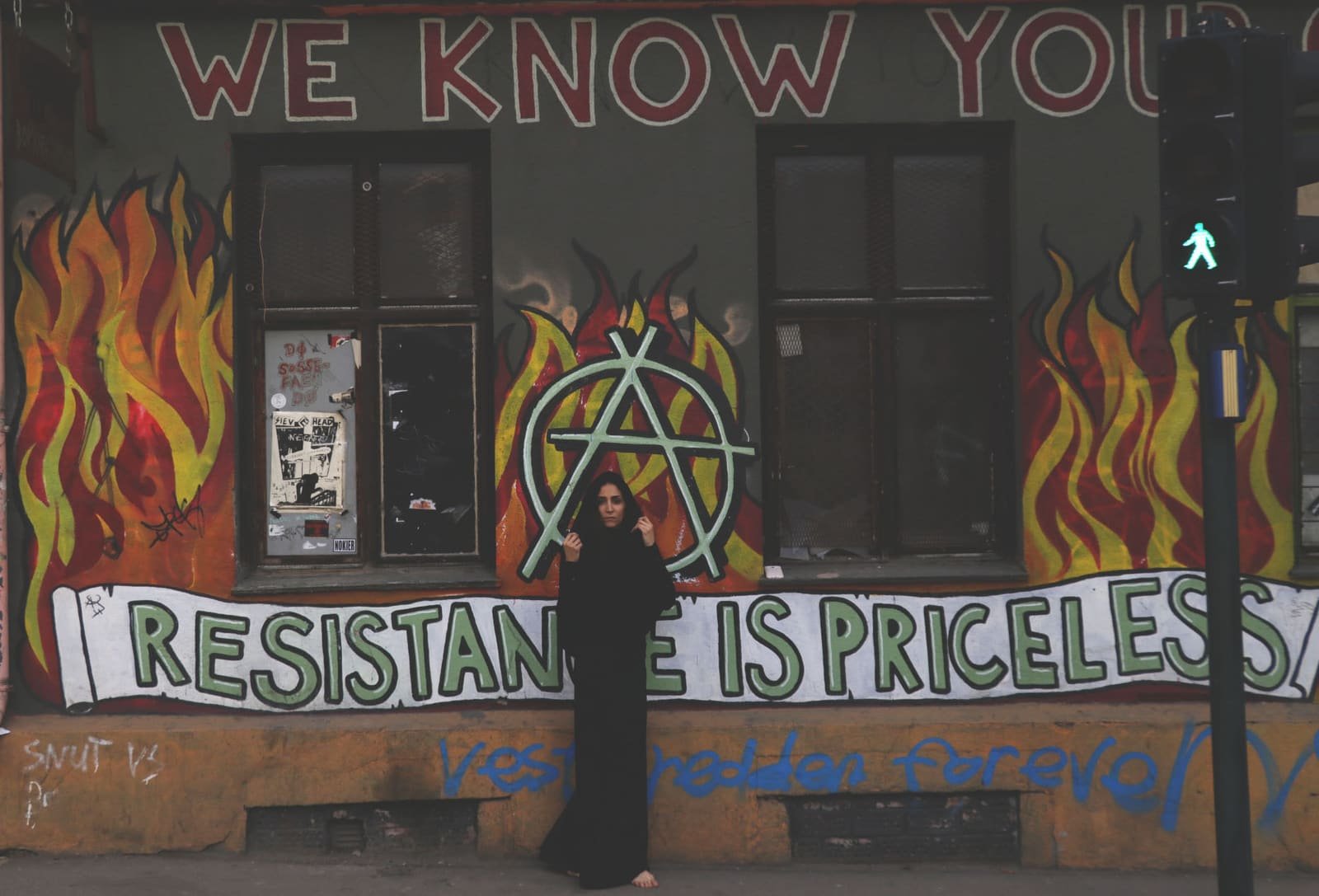
First published on Sumedha’s earlier website on 10 August 2020.