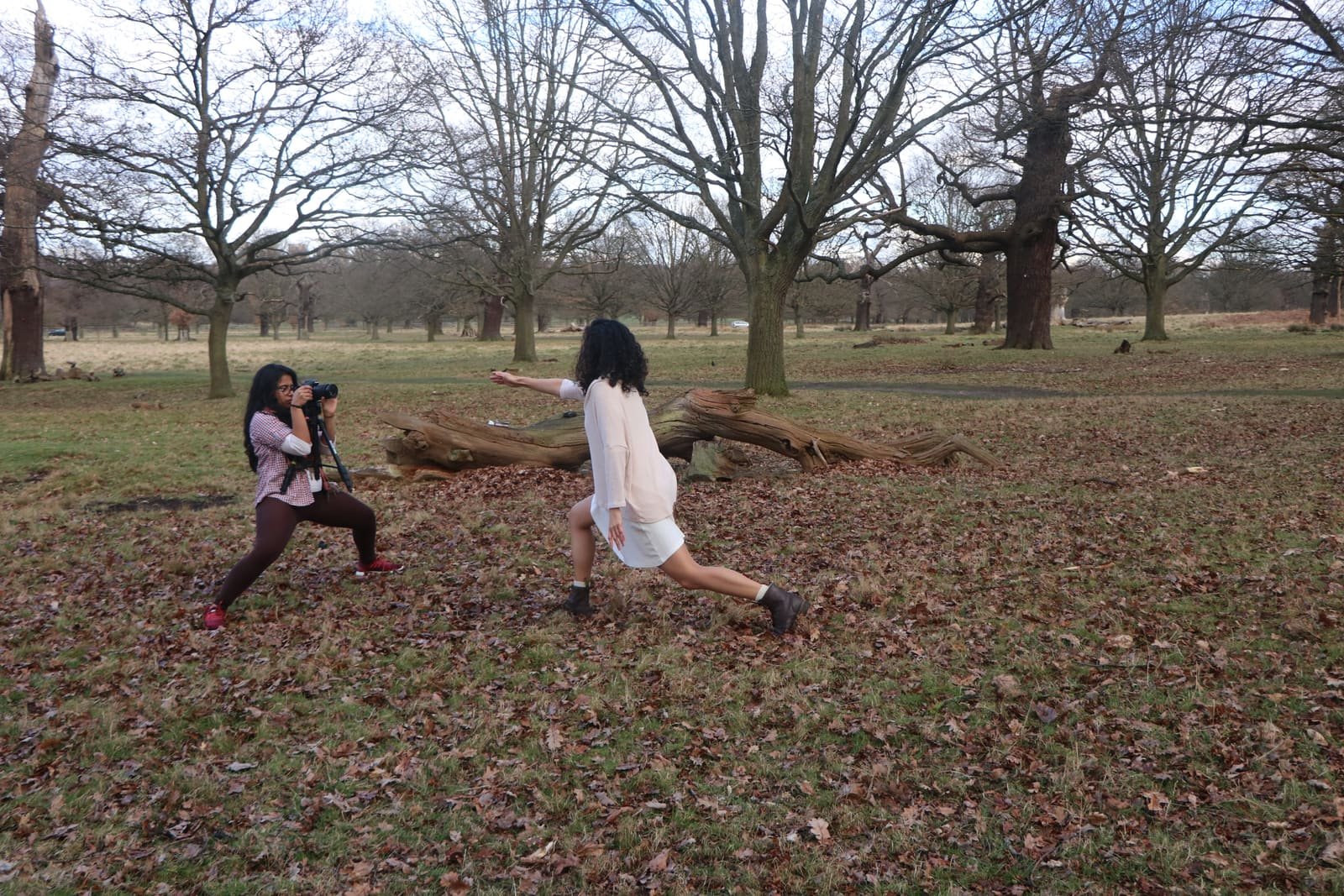
In continuation of my previous blog posts, I write this today from a different perspective, where I share my subjective experience of holding the camera and performing with the moving body.
Screendance, the hybrid art form of filmmaking, gives an opportunity to create a multi-sensorial experience with an emphasis on kinaesthetic empathy that triggers somatic reactions in the viewer. It enables them to feel the qualities of movements in their own bodies, on a muscular and visceral level: ultimately an invitation to dance. The course “Mediated Choreography,” conducted by Dr Heike Salzer, was introduced to us at the University of Roehampton. As an assignment for this course, my long-term collaborator from Iran, Hediyeh Azma, and I took our collaboration to another level by creating Saraab, our first screendance film.
Saraab, which means mirage, was about the relationship of a father and a daughter, through Hediyeh’s in-situ experience of death.
It was akin to the feeling of constant fluctuation between the imaginary spaces where one feels the departed, but also the real space which misses their presence.
Listening to this subjective experience of Hediyeh’s, I was not a collaborator anymore, but an empathetic listener. I bring in Vittorio Gallese and Giacomo Rizzolatti’s discovery of mirror neurons in the brain, with reference to Gallese’s articulation of embodied simulation. Saraab indeed became something where I, as a cinematographer, without having a subjective experience of death, could feel an ‘empathetic response’ to images, in this case an image of death. Gallese posits that people have a ‘we-centric’ dimension, which ‘enables us to share the body state of the observed person through witnessing their behavior, emotions, and displayed feelings’ (Wood, 2016).
For me, as the observed person holding the camera, it becomes important to engage with the ‘essence’ of this imagery that emotes the quality of the feeling that is otherwise overlooked. In our discussions and conversations about how we would like to incorporate this, we both agreed that we had to bring the ‘movement’ of ‘flux’, an act of flowing in and flowing out, through choreography and film techniques. First, it led us to emphasise a ‘singular location’ that can modify the body’s ‘movements, qualities, or connotations’ (Walon, 2016). Before we went to the location, we planned to try different shots in the studio according to our ‘screen-notes’.
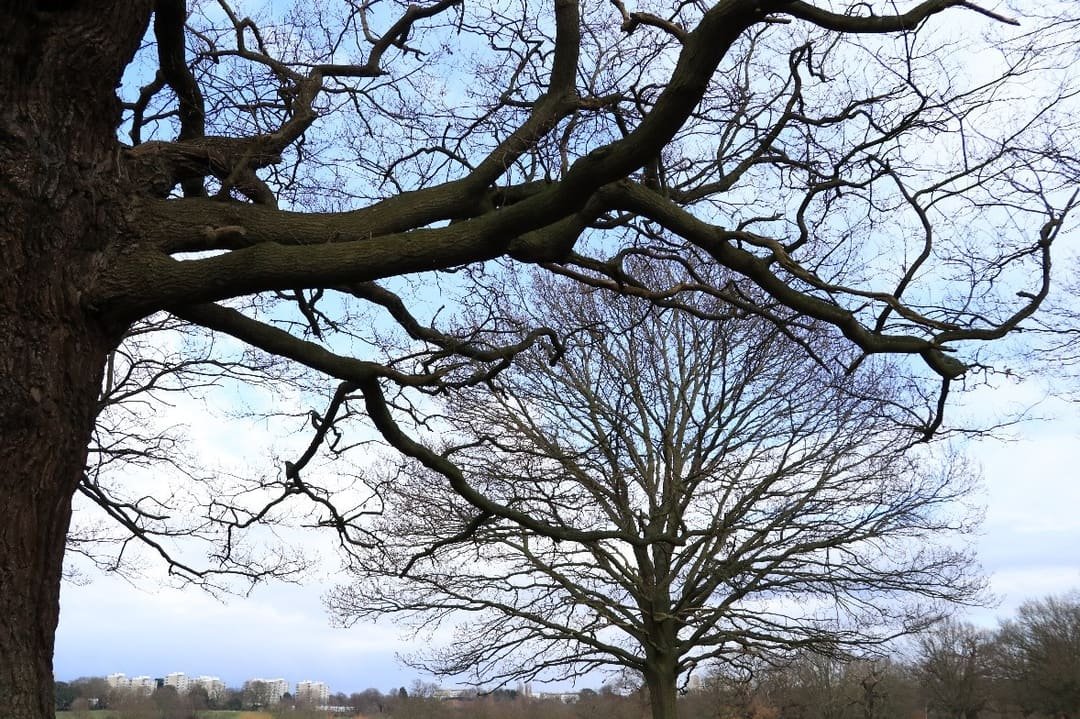
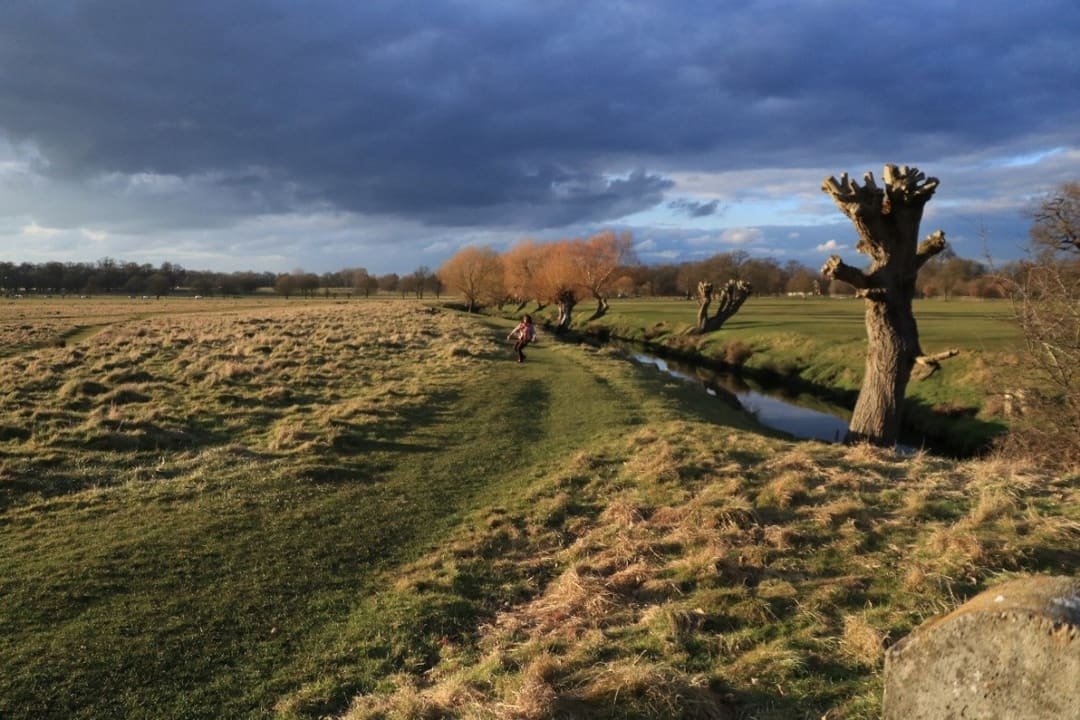
Hediyeh constructed an over-arching choreography on the music, which could be perceived through different angles by me. Our first location was a “natural” space, a space that could help us show the reality, the living, and its existence. Richmond Park in London, a sanctuary just behind our university, proved to be the right spot, and that location became the stimulus for performance.
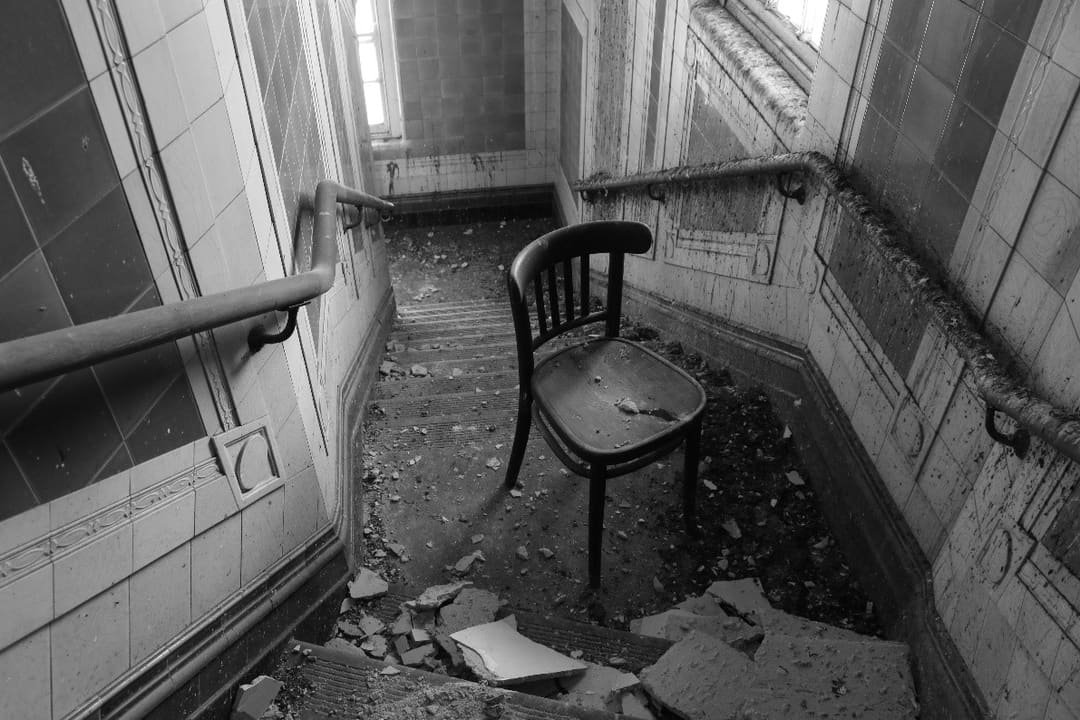
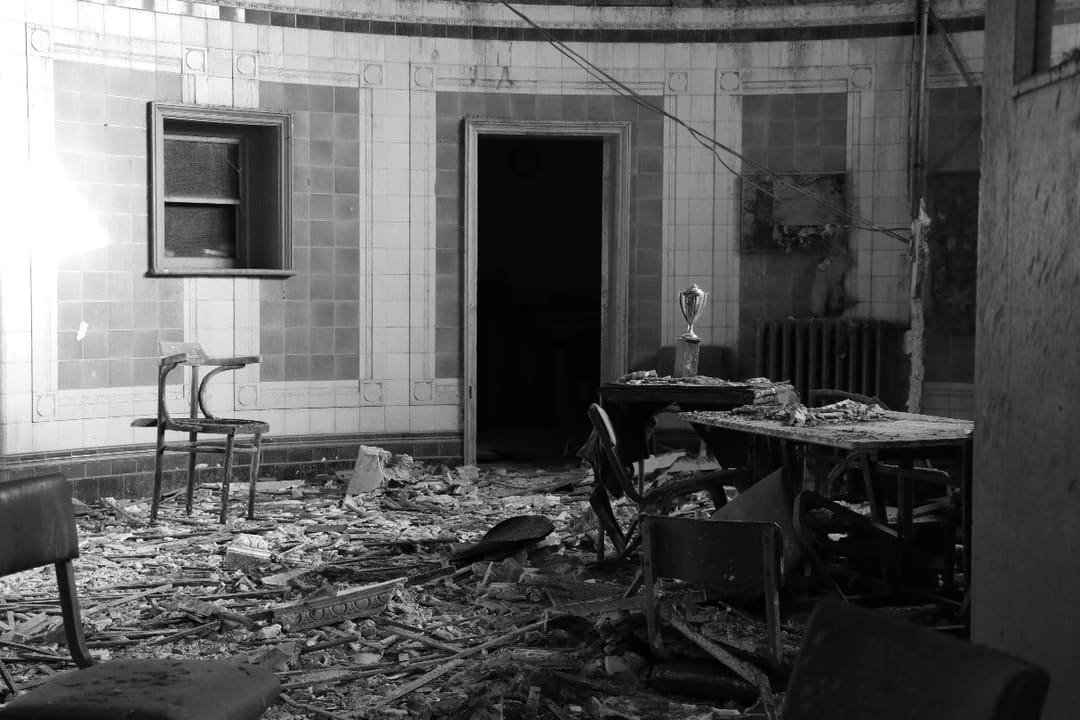
The second location was an abandoned space, a space that is real and unreal at the same time, much like the French post-structuralist Michel Foucault’s heterotopia.
Within the scope of this research, I would like to share two shots in Saraab that demonstrate the ‘we-centric’ approach to capturing the movement of flux. A person is apparently most vulnerable while sleeping, so we decided on our establishing shot for the film in post-production.
How can I translate that feel of dreaminess, the act of waking up, in a rectangular frame, through the moving body and camera?
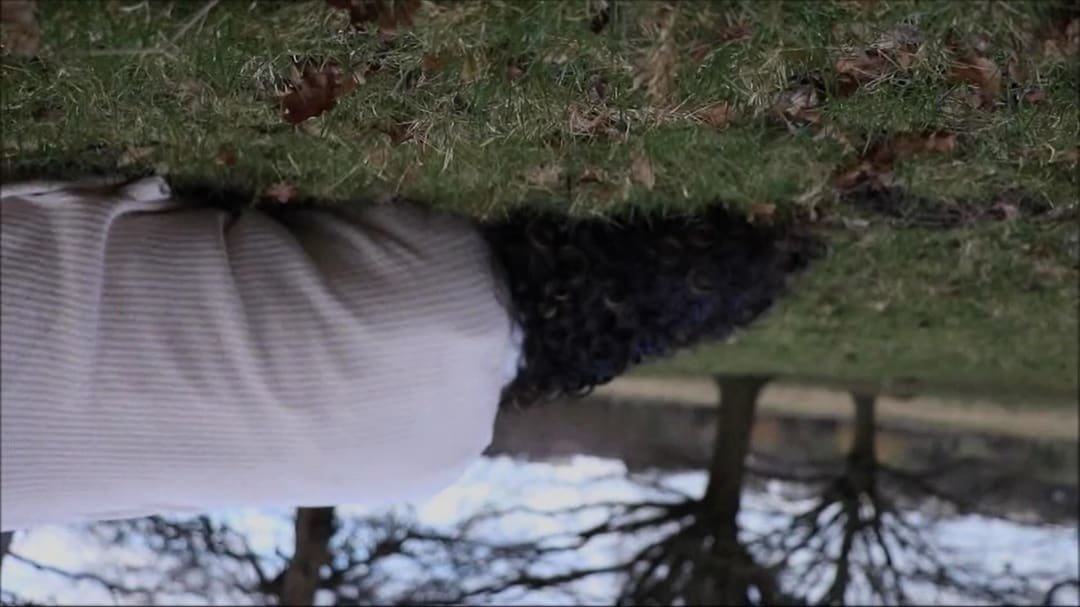
To achieve something so ephemeral is beyond just a choreography that lies in dance, or a film technique, but needs an aesthetic that transforms the kinaesthetic confluence of both disciplines of dance and film.
It is about the negotiation of framing: fixing the right settings for the desired frame and treating the camera as a dancing body, I literally negotiate between the rotation of the camera, Hediyeh, and myself. I had to sleep and move the camera in tandem with the rhythm of the body getting up. As a dancer behind the camera, one has to dance with the dancer in front of it. Once we put the footage with the music by our collaborator Negin Zomorrodi, an Iranian musician, and decreased the speed of the footage by the bare minimum, the start of the music and the first shot combined and finally connected the dots. The dreaminess and haziness of getting up finally made sense.
In the screendance filmmaking process, we needed to be aware of the rhythm, the timing, and which movement could suffice, even before we actually got the final clip. A lot of the stability in holding, moving with it, and yet not being shaky came from core work and fitness as a dancer.
The post-processing of this shot was done by Hediyeh, who juxtaposed the feeling of in-betweenness through the rhythmic movement and dissolving of frames from both locations.
The next shot I would like to describe is what I like to call a ‘liminal shot’.
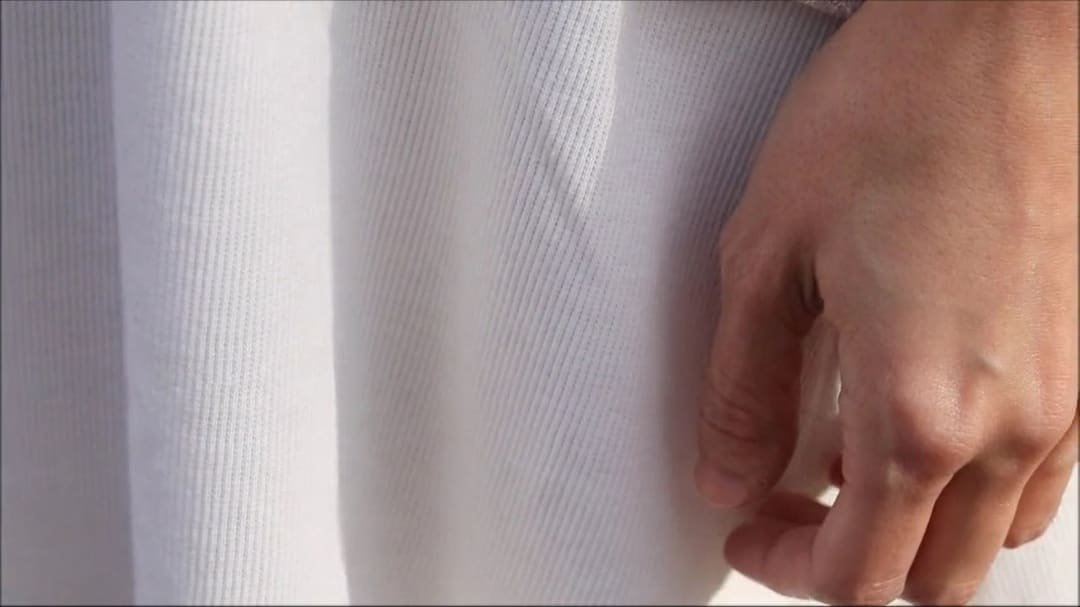
My previous body memory of chakkars, the spins in Kathak, was instrumental in our filmmaking process too.
Informed by a conscious effort to incorporate the feeling of spinning, rotation, and dimensionality, I applied this with the camera, moving around a body vertically from the bottom to the top and changing the spectatorship of the spin (1:40 to 2:17 in the film). It is definitely bumpy, hazy, and all over the place. You see two places at once, and sometimes you just see a clear divide between the two. Together we juxtaposed that feeling in the existing process, creating a rhythmic choreography along with the music.
Together we thought that this shot could be a perfect example of the transition, the space in between two locations, with the feeling of being neither here nor there: a space real and unreal at the same time, a heterotopic space.
The choreographic transition from reality to dream or imagined reality, and back, is not a straight line.
Saraab: Mirage by Sumedha Bhattacharyya (India) and Hediyeh Azma (Iran): watch the film →
First published on Sumedha’s earlier website on 3 October 2020.